The fourth day of December, after weeks at the mercy of the Pacific’s tantrums, our vessel La Vérité, worn from storms and strained timbers, limped into a narrow inlet along the coast of a vast green land the locals call Aotearoa. Dense bush rose like waves of its own behind the shore, and gulls wheeled above as if warning us back to sea.
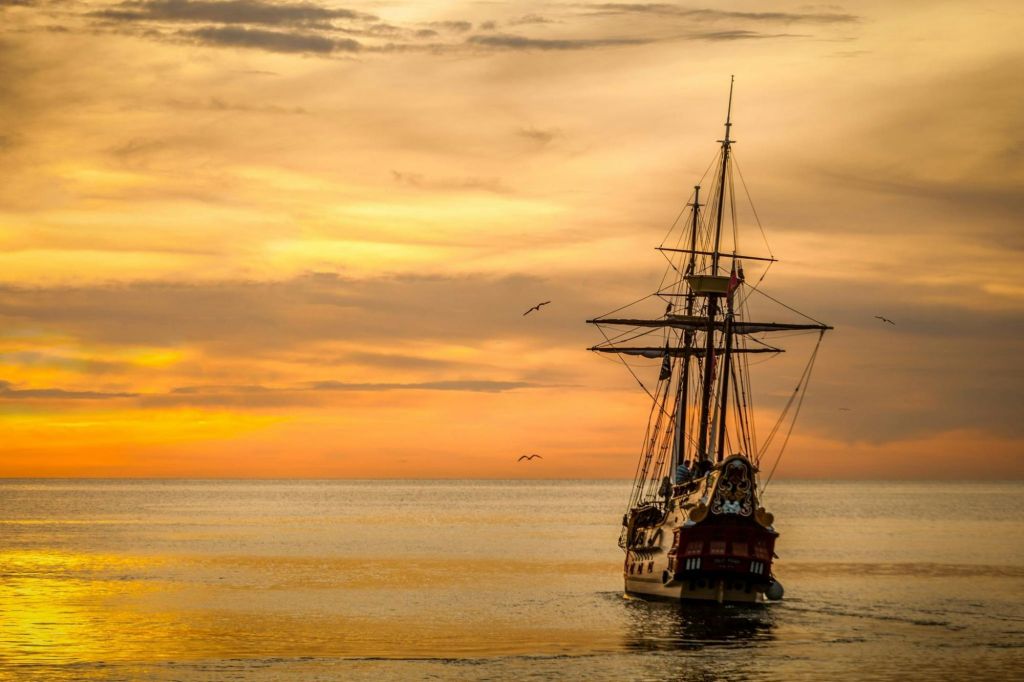
We had come in peace—Captain Duval ordered our anchorage in the calm bay not for conquest, but for water, wood, and repair. The hull leaked at two seams, and the crew—French and Breton alike—hungered for rest more than spoils. We had seen no human sign, until near midday, when the rhythmic thunder of paddles broke the stillness.
Three canoes approached, each carved like a war god’s spear. Their occupants—tall, tattooed, proud men—gazed at us with eyes that missed nothing. The tallest among them, who called himself Te Hāka, hailed us in a strange tongue, punctuated with guttural chants and hand gestures that seemed both greeting and warning.
They brought bundles wrapped in flax: smoked fish, sea-birds, even limp root vegetables of a sort. It seemed generous, and in return, they gestured toward our rifles. Te Hāka tapped one long finger to the stock of Ensign Renault’s musket, then mimed firing it at an unseen enemy. We understood: they were at war, and they wanted weapons.
Captain Duval refused politely, offering instead nails, axes, and glass beads—baubles that delighted the islanders. Or so we thought.
An hour later, Te Hāka and several others returned—smiling, generous again. They asked to board, bringing more “gifts.” But once aboard, smiles turned to snarls. Te Hāka pulled a hidden club from beneath his cloak and struck Renault dead before the man could shout. Another drove a sharpened bone through Bosun Leblanc’s throat. It was a sudden storm of violence.
But our sailors are not green boys. We fought back. Pistols flared. Blood and smoke mingled. Six of them fell before the others fled overboard, paddling with fury, dragging their wounded.
We buried three of our own that evening, with cannonballs at their feet. Captain Duval ordered watches doubled and sails mended by night.
Later, we learned through a boy who stowed away in our yawl that the survivors told their kin the Frenchmen had lured them aboard only to butcher them. That we had betrayed their good will. The lie took root. The tale, I hear, still grows—twisted like vine over truth.
Thus was born the legend of the evil pale ghosts of the Bay of Spirits.
This is written and posted in response to the Radio New Zealand article: Anchor rediscovery reopens wounds from early encounter between Māori, European (July 21, 2025).
 eN-Zed